Rating: 9/10
Genre: Dystopian Fiction
Spoiler Warning for The Hunger Games Triolgy and The Ballad of Songbirds and Snakes
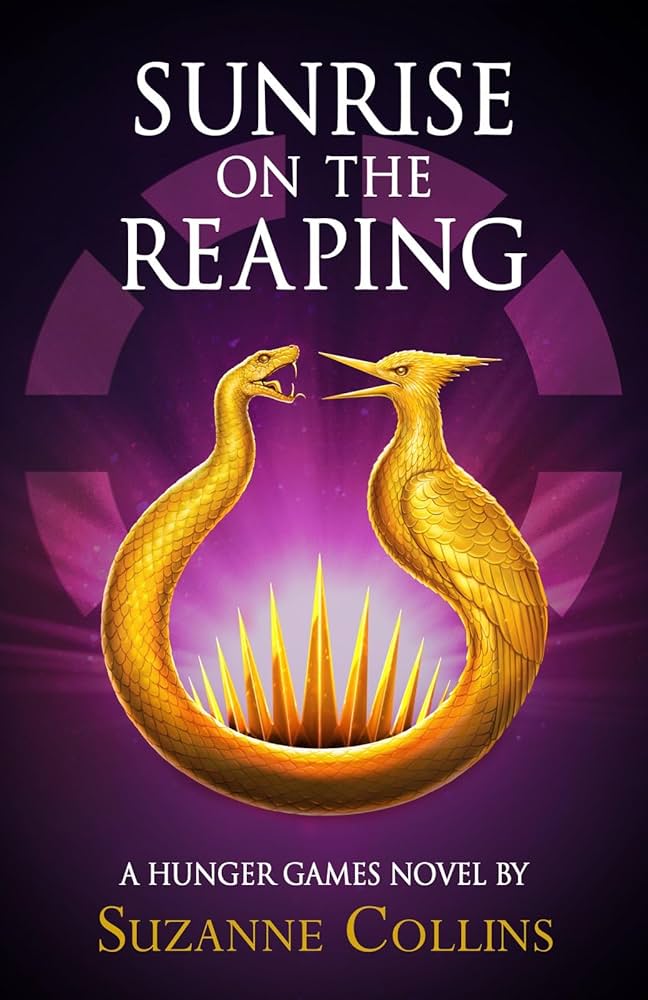
This book was a wild ride. The plot itself was actually so unexpected. Because of what we already see about the Quarter Quell, I thought I knew the rough outline of the plot. I did not, because what we see in Catching Fire is actually the Capitol manipulation of what happened during the Quarter Quell, which I think is a fantastic twist that really shows the dystopian nature of perception control. I loved the use of symbolism, and of poetry and song. I really enjoyed getting to see Katniss’ parents, and more of District 12, it’s people, and it’s traditions, as well as seeing more of the Covey.
I loved the complexity of all the tribute character– no one was entirely bad or entirely good. This book featured obvious acts of rebellion and disruption, but it also (and perhaps most importantly) featured acts of rebellion in the shape of kindness and unity. President Snow is also a surprisingly well-developed character in this book: he is the villain here in a way he is not in The Ballad of Songbirds and Snakes. He is powerful, and you get a glimpse into the mind of President Snow, in a way we didn’t necessarily get when he was still Coriolanus (and not yet in power). His cruelty is on full display here. I was also fascinated by the way the Hunger Games and the Capitol’s power still aren’t fully developed here: there are several mistakes and malfunctions on the part of the Capitol. The structures we see in the Hunger Games trilogy are not yet fully developed– but at the end of the day, it doesn’t lessen the Capitol’s power, becaus, regardless of what happened in reality, their true power comes from complete control over perception.
My favorite character in the book was, by far, Maysilee Donner. She was such a vivid character, practically jumping off the page. She didn’t ask people for respect, she demanded it, no matter how dangerous it was for her. She took the label “shrew”, and embraced it. Vicious, capable, and so wonderfully full of life, no one could break her spirit.
My second favorite character actually didn’t get much screen time, but I really loved what we got to see of Asterid March, who later becomes Katniss’ mother. She is all quiet strength and resilience, while keeping a sensitivity that most of the other character’s are forced to lose through the sheer brutality of their circumstances, particularly the characters who spend time in the Captiol.
Overall, I really enjoyed this book. However, the closer I got to the final chapter, the more full of dread I became– I knew the ending, and I knew it wasn’t pretty. It was, perhaps, even more brutal than I was expecting. Something Suzanne Collins does very well is that she embraces the idea that there are no fully happy endings, even in epilogues. Her Haymitch felt realistic, and as a reader, I really felt the hopefulness of his youth, and the despair of his reality. I recommend reading it– no matter how much you’re already dreading the ending.
 Bookworm's Haven